

Tobacco Road | Colombia: DO
A private cigar journey from Bogotá to Barichara that follows Colombian tobacco from the first cut to the rolling table and, when the season allows, back to the field.

A WhereNext Original is an experience our team discovers, develops, tests, and takes operational responsibility for delivering. It introduces guests to people, places, and ideas they would be unlikely to find on their own.
The tobacco leaf looks tougher than it is.
On the rolling table in Barichara, it lies flat and heavily veined. It reminded me of the sheets of dried seaweed I used to eat at my best friend’s house in Seattle. His family had immigrated from China, and there was almost always a package open somewhere in the kitchen.
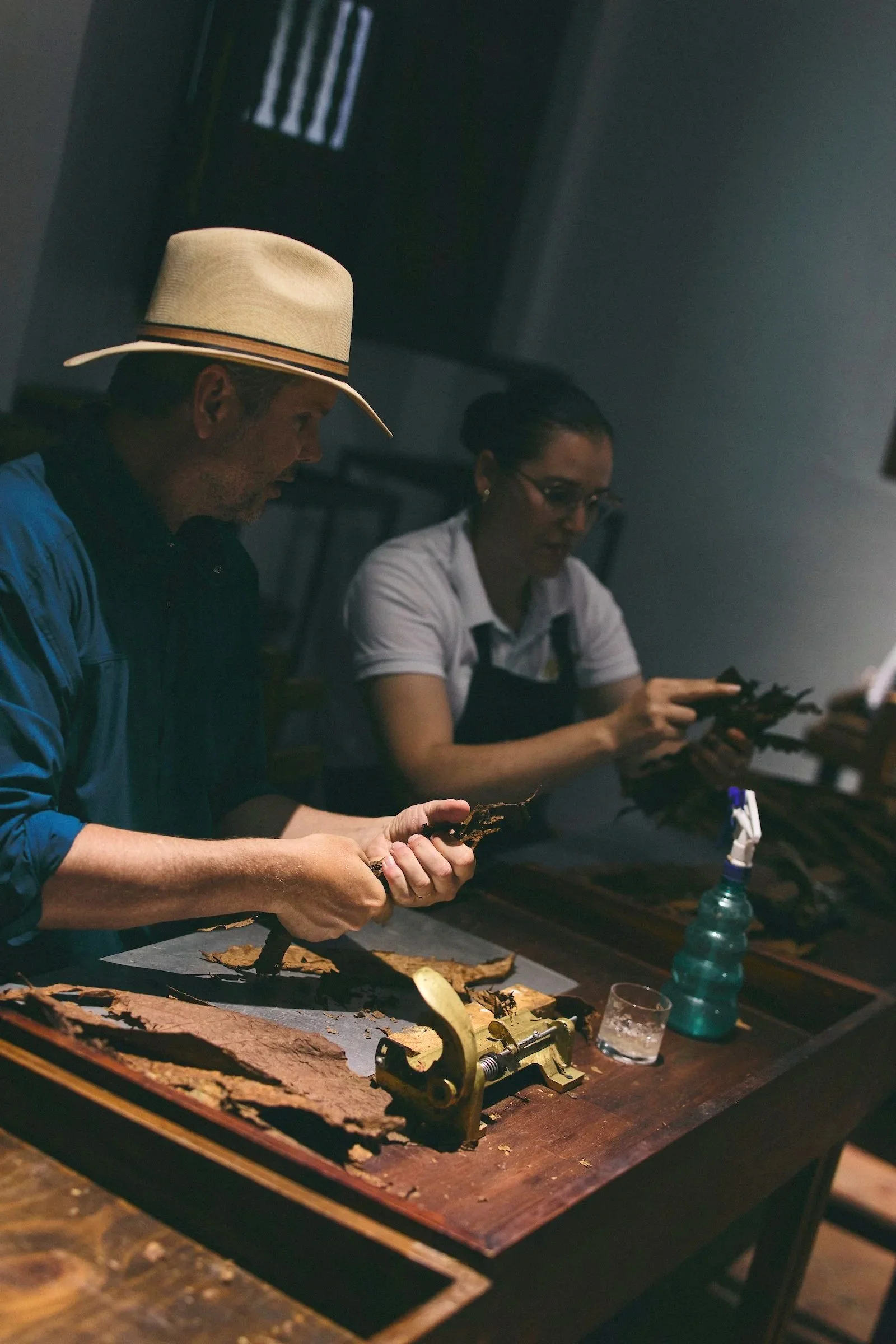
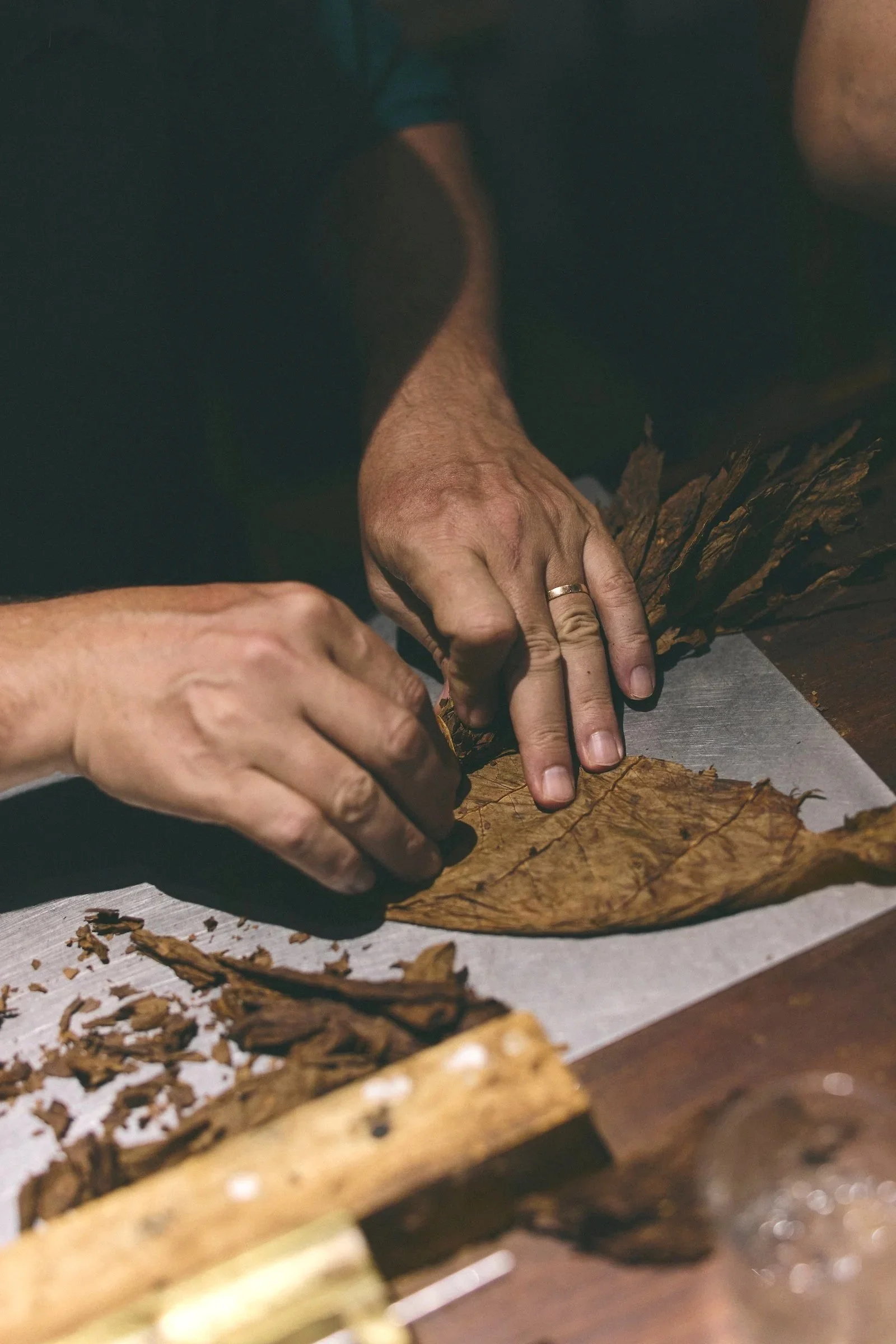
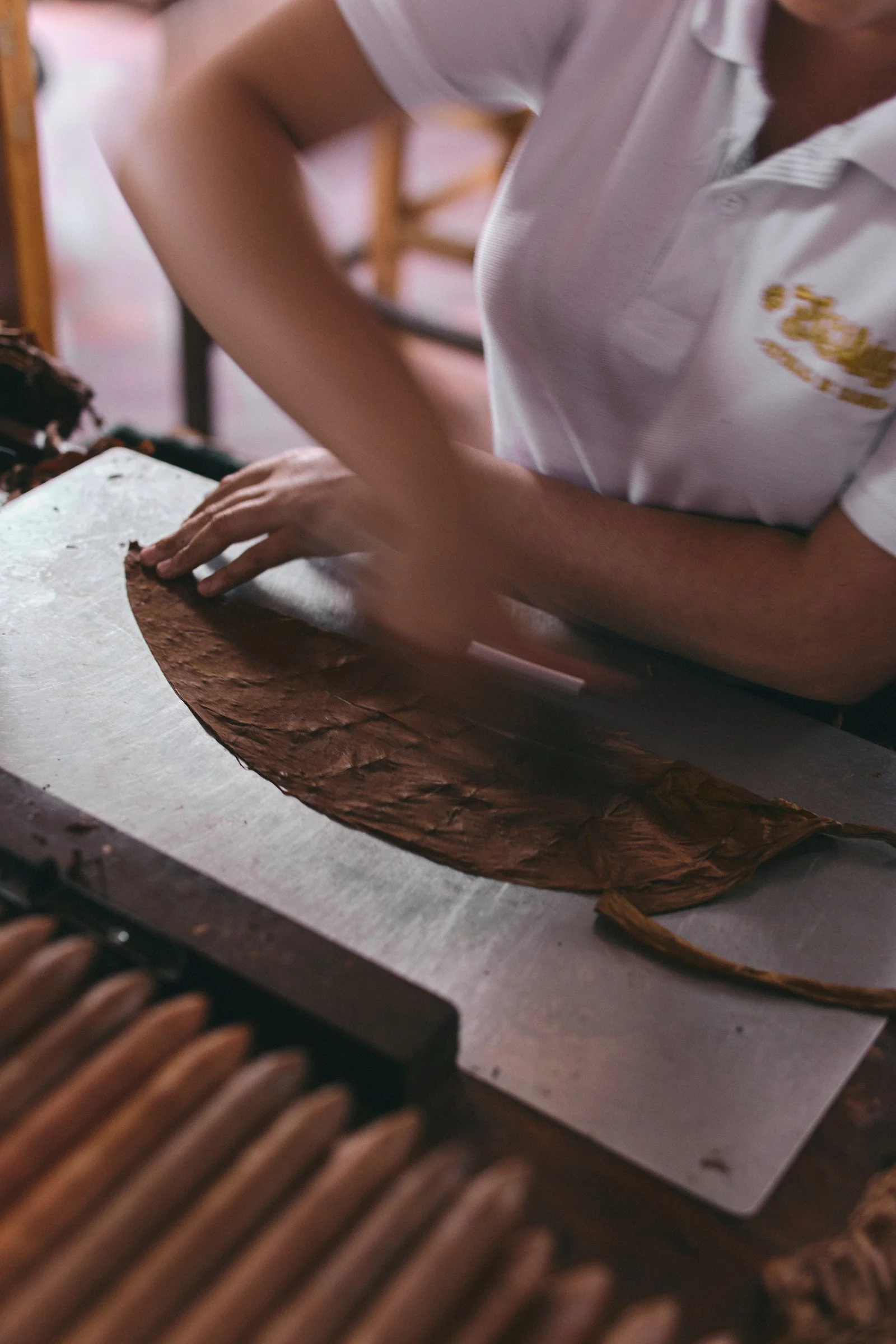
One of Bribón’s torcedoras presses the tobacco leaf gently with the palm of her hand, cuts away part of the central vein, and turns it a few degrees. She does this without hurry.
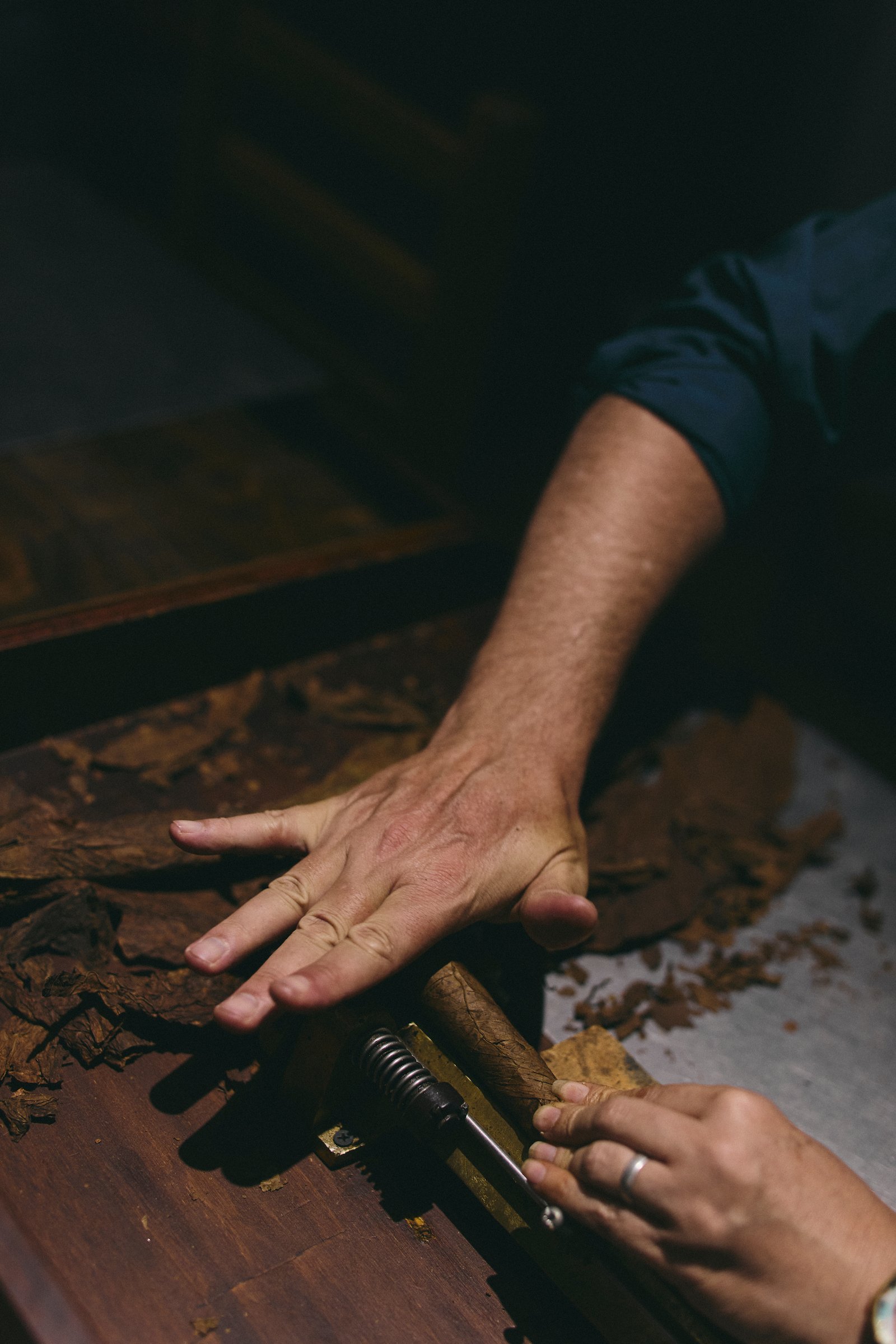
Then she gathers the filler leaves, folds them into a loose bunch, wraps them inside the binder, and begins rolling the cigar forward across the table.
A little too much force and the cigar will be difficult to draw. Too little and it may burn hot, fast, and unevenly. The wrapper must finish the job without tearing, wrinkling, or revealing any mistakes. A few minutes later, she slides the cigar across the table.
“Now it is your turn.”
Your first attempt will probably look terrible. Like my grandpa used to say, you always throw out your first pancake.
That is part of Tobacco Road.
The Skinny
A private two-hour cigar and pairing experience at Bribón’s tasting room in Bogotá
Access to Bribón’s working factory and bar in Barichara
A hands-on, 30-minute cigar-rolling session with the people who make Bribón cigars every day
Tastings built around Colombian cigars, food, coffee, chocolate, fruit, and spirits
Seasonal visits to tobacco fields near Barichara when the crop and farm work allow
A Bogotá-to-Barichara experience co-created by WhereNext Travel Colombia and Bribón Cigars
Tobacco Road can unfold as a complete journey or through separate Bogotá and Barichara chapters.
Bogotá serves as an introduction to the product and the history of tobacco in Colombia. Barichara takes guests into the heart of its production, hands-on.
The Experience
Bogotá: Behind the Humidor | 2 Hours
Tobacco Road begins at Bribón’s tasting room in Bogotá.
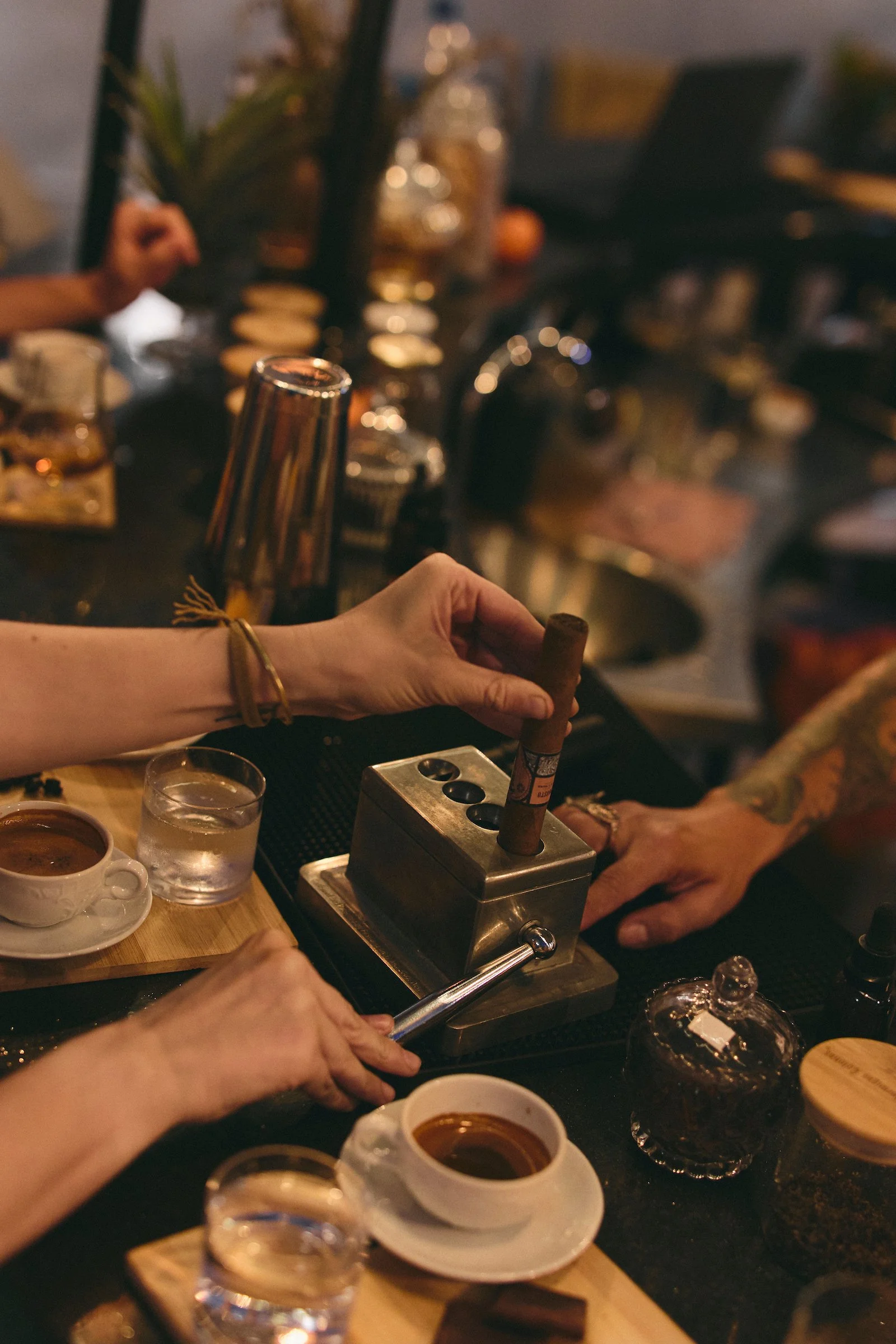
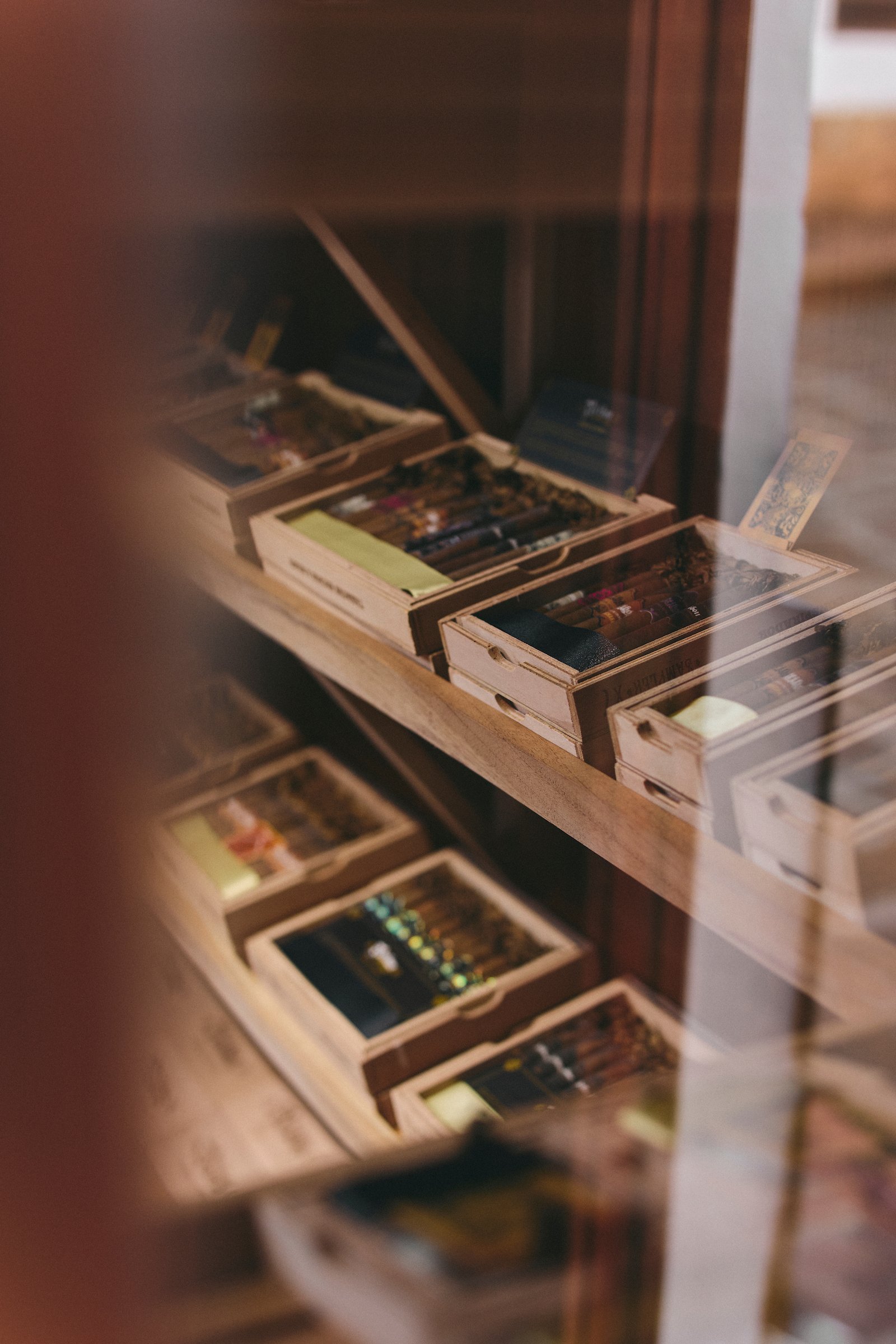
At first, the table is fairly simple: cigars, cutters, lighters, glasses, and a few carefully selected foods. The cigar sits in the middle of it all, still unlit.
Before anyone reaches for a flame, the host explains its construction.
A premium cigar is built in three working layers. Filler leaves form the interior. A binder holds those leaves together. The wrapper closes the cigar and gives it its finished appearance.
They may come from different tobacco varieties, farms, harvests, and stages of fermentation. Getting them to burn and taste properly together is not a matter of stuffing leaves into a cylinder. It is blending, agriculture, storage, judgment, and handwork disguised as a brown tube.
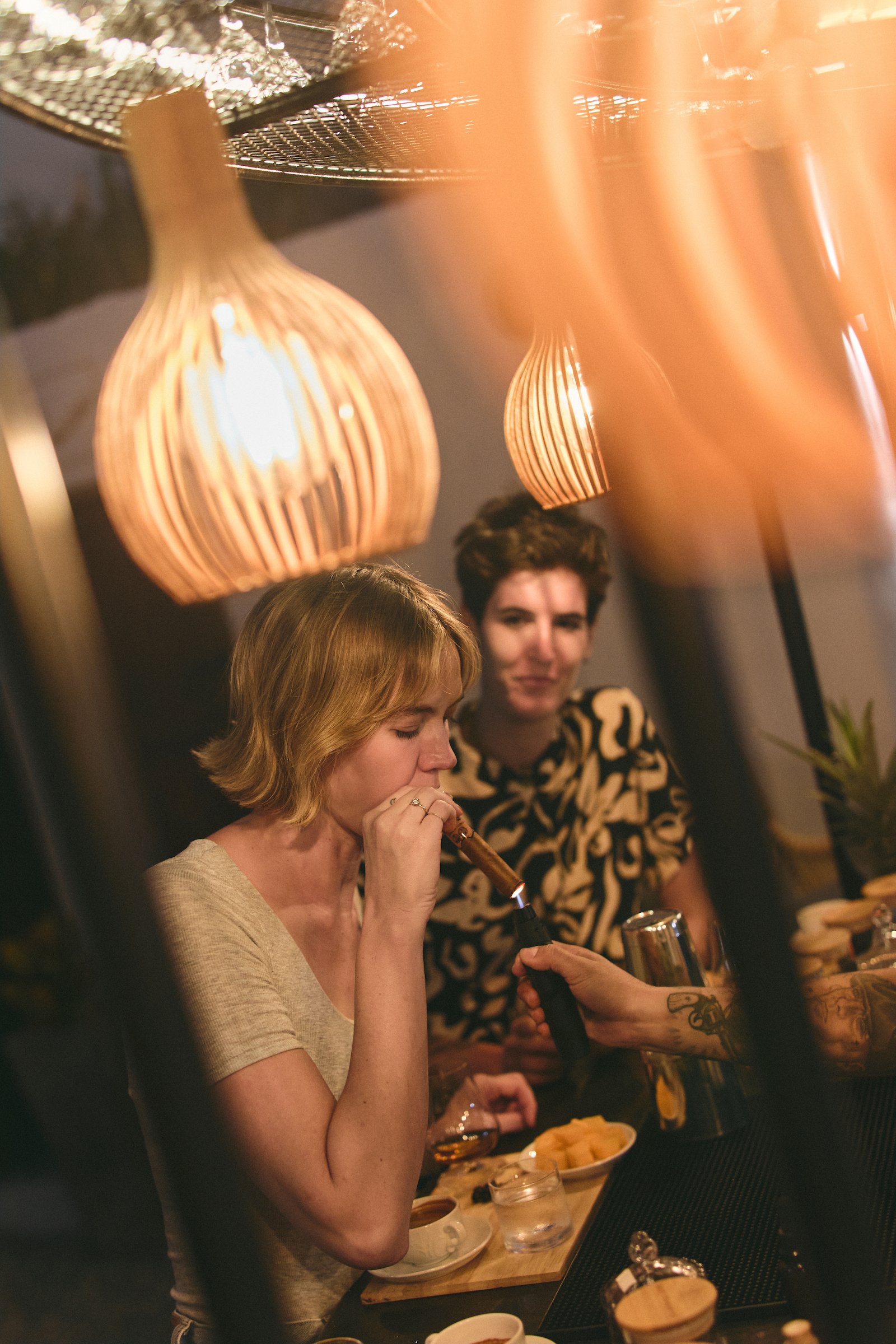
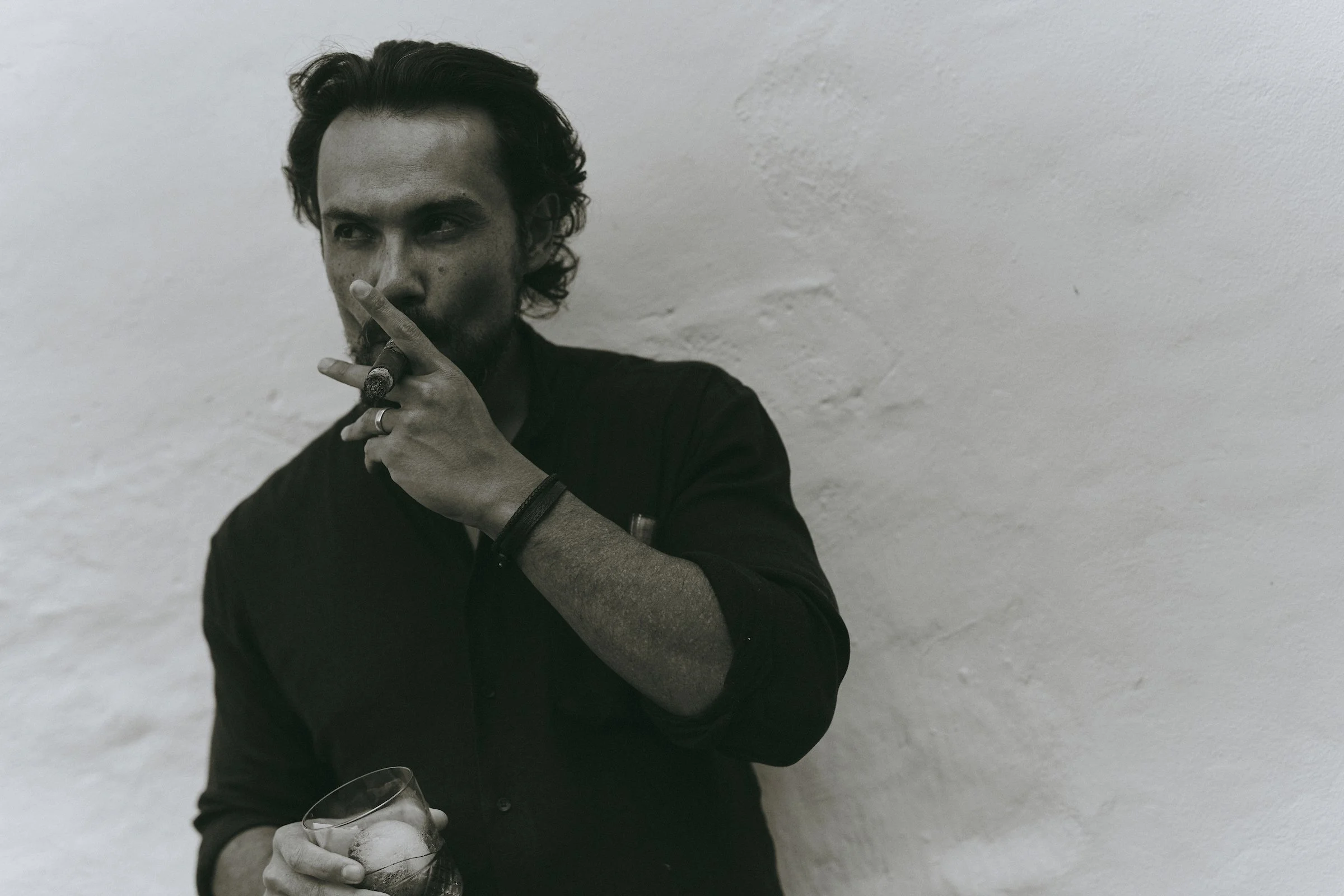
Guests learn how to inspect the cigar, cut the cap, toast the foot, and light it evenly. Nobody is required to pretend that they detect seventeen flavors in the first puff.
The tasting begins with simpler questions.
Does the smoke feel dry, creamy, sharp, or soft?
What changes when it is paired with coffee, chocolate, fruit, food, or a Colombian spirit?
A Bribón Belicoso is a shorter cigar, generally smoked over 30 to 45 minutes. The Churchill extends closer to an hour and a half. The Torpedo usually falls between them, at roughly 60 to 75 minutes, depending on the smoker and the conversation happening around the table.
The objective is not to smoke through a catalogue.
The cigar is selected around the guest, the pairing, and the amount of space the experience should occupy inside the evening.
Bogotá introduces the finished product and begins to dive into the agricultural, historical, and technical decisions concealed beneath its wrapper.
Then the journey moves north.
Barichara: Inside the Factory | 30 Minutes
In Barichara, tobacco arrives in leaves rather than boxes.
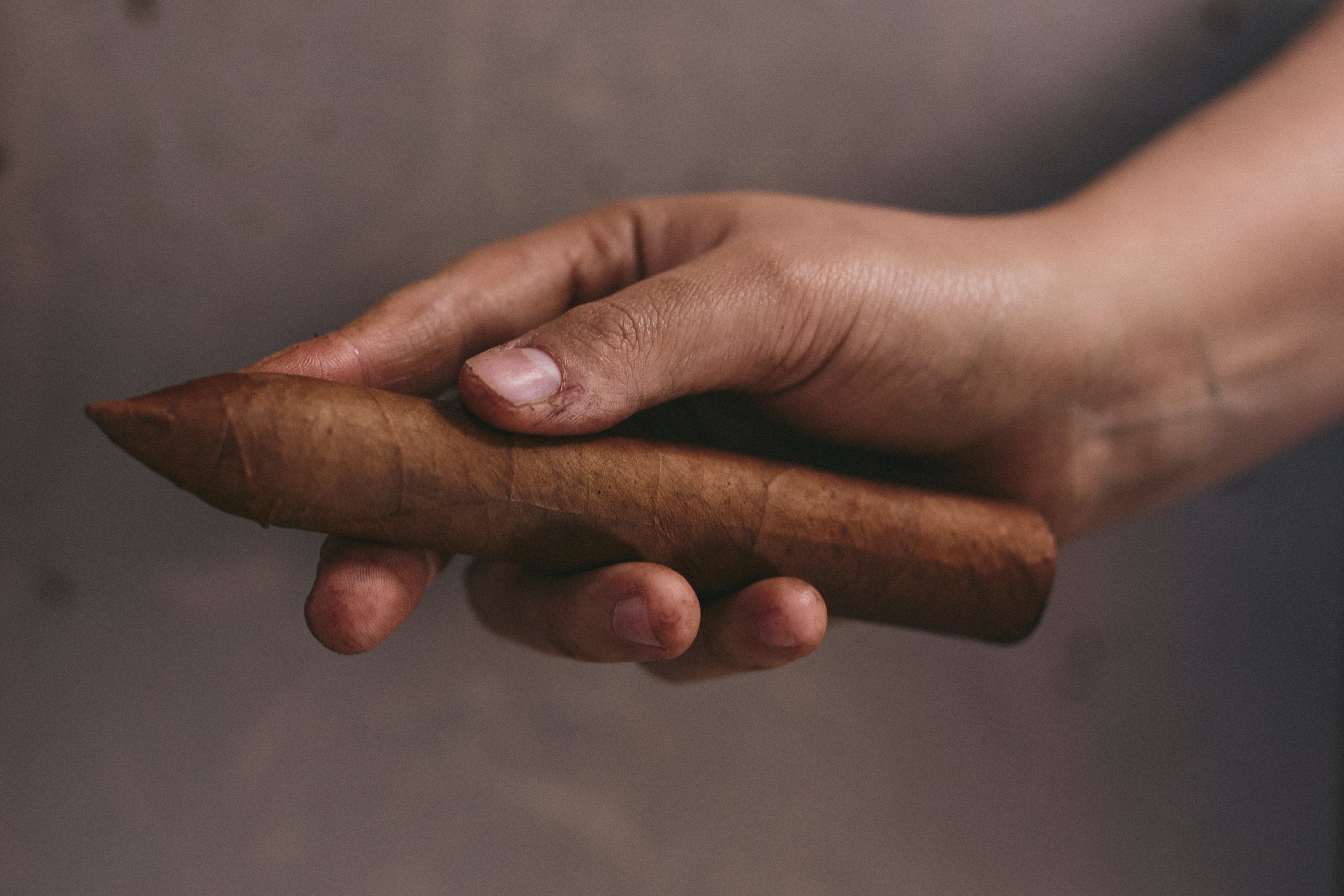
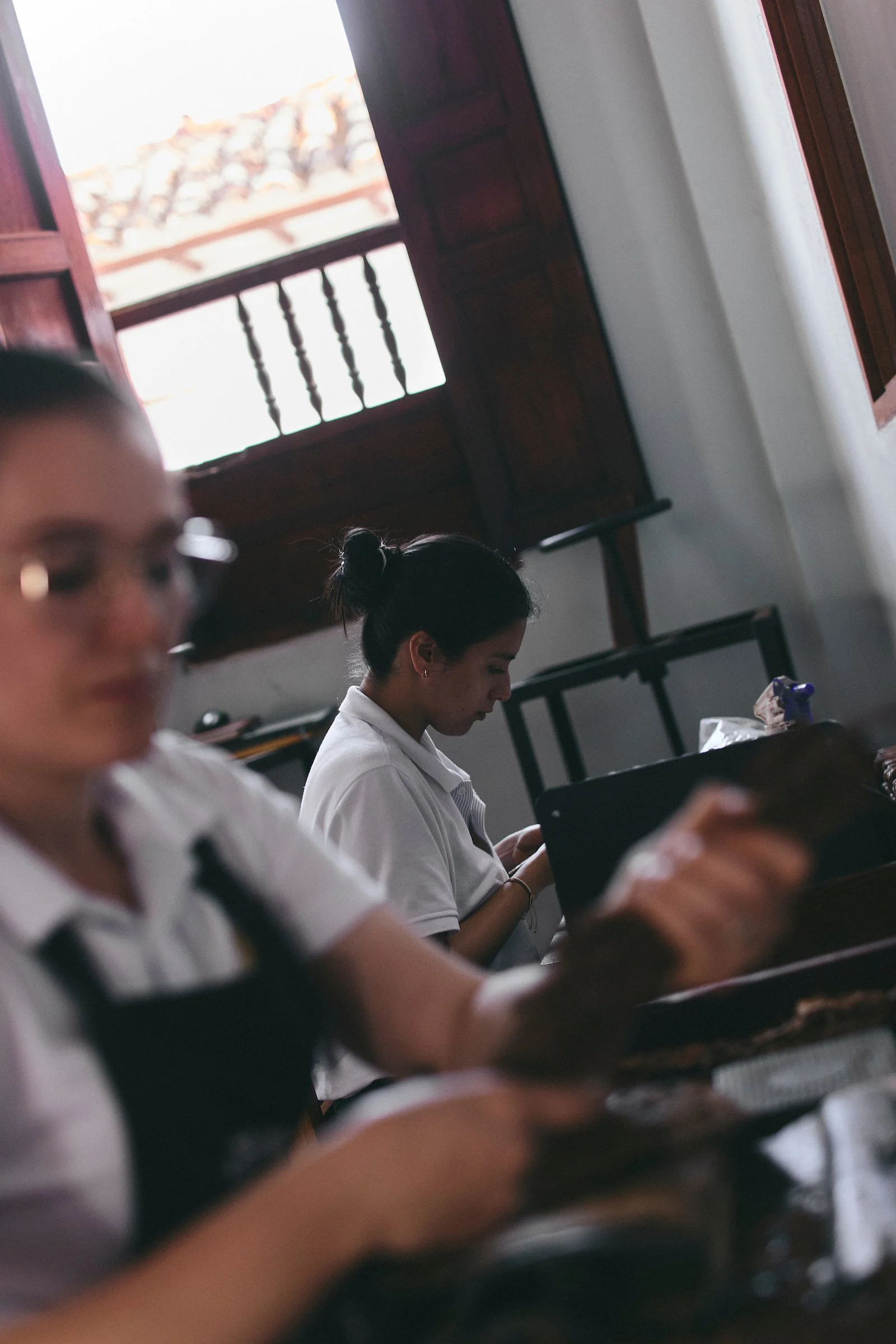
The factory smells of wood, fermentation, earth, and smoke. Bundles of tobacco wait to be sorted and prepared. Finished cigars rest before inspection. Torcedoras work at wooden tables with small cutting tools, molds, plant-based adhesive, and hands that know how much pressure is enough.
Bribón’s Barichara operation produces cigars by hand using leaves selected from Santander and Montes de María. Guests can observe the rolling process and sit beside the factory team to roll a cigar of their own.
Watching a torcedora work from across the room creates a dangerous illusion. The movements look easy. They stop looking easy the moment you sit down.
The filler leaves must be arranged so air can travel through the length of the cigar. The binder must hold the bunch together without choking it. The wrapper must spiral across the surface in an even line, finishing at the cap without splitting.
Every movement has consequences that may not reveal themselves until the cigar is lit. A soft section can cause the cigar to burn unevenly. A tight knot can block the draw. A damaged wrapper can unravel while someone is holding it.
Guests roll their own with help from the factory team. Nobody expects the result to rival the work being done beside them. The value is in understanding why the professional version does.
The factory experience can continue well beyond the rolling table.
Bribón’s bar can be opened for a private food and liquor pairing designed around the selected cigars. Depending on the group and the mood of the itinerary, a local band or DJ can provide the soundtrack.
A Colombian Cigar Judged Blind
In 2025, one of the cigars made by Bribón earned significant international recognition.
CigarsLover Magazine ranked the Bribón Torpedo No. 5 in its Rest of the World category, one of five geographic categories in the magazine’s annual awards.
It was a serious result for a young Colombian producer.
The Bribón Torpedo received 90 points.
The best part of the story is how the cigar was judged.
The band was removed. The country was hidden. The panel did not know it was smoking a Colombian cigar made by a company still tightening its control over farming, fermentation, blending, and production.
Back to the Field
The factory is not where the cigar begins.
When the crop calendar, weather, and farm operations align, Tobacco Road continues into the tobacco fields near Barichara.
What guests see depends on when they arrive and what the plants need.
Early in the cycle, the tobacco may still sit low to the ground. Later, the plants rise above the waist, their broad leaves spreading from a thick central stalk. During harvest, workers select leaves according to their position on the plant and their stage of maturity.
After cutting, the work continues.
Leaves may be sewn and hung to cure. Moisture slowly leaves the plant material. Color changes. The raw green leaf begins its long transition toward something that can eventually be fermented, aged, blended, and rolled.
At another time of year, the most important work may be happening away from the field. Guests may encounter curing, sorting, fermentation, or agricultural trials rather than harvest.
Depending on the season, Tobacco Road can include harvesting, sewing and hanging leaves, or learning about fermentation with the Bribón team.
What Guests Experience
Learning to cut, light, smoke, and evaluate a handmade cigar in Bogotá
Pairing cigars with Colombian coffee, chocolate, fruit, food, and spirits
Understanding the roles of filler, binder, wrapper, fermentation, aging, and blending
Meeting members of the Bribón team behind the finished cigar
Entering the company’s working factory in Barichara
Rolling a cigar by hand with guidance from an experienced torcedora
Comparing the balance of different cigar sizes and formats
Visiting tobacco fields near Barichara when the agricultural calendar allows
Seeing how a living leaf becomes a product that may take years to reach the humidor
The World Behind the Cigar
Most international travelers associate Colombia with coffee.
Tobacco came first.
During the nineteenth century, tobacco became one of Colombia’s most important agricultural exports. Its principal boom ran from roughly 1850 to 1877. Coffee began carrying significant weight in the country’s exports around 1865 and eventually became the national symbol that tobacco never was.
At its height, tobacco exports rose to nearly the same value as gold exports during Colombia’s Radical period.
Then the boom collapsed.
The international market changed. Production declined. Coffee expanded. Much of Colombia’s tobacco story slipped out of common memory. The knowledge did not disappear completely.
Farmers continued growing the plant. Workers continued curing, sorting, fermenting, and rolling leaves. Santander remained closely connected to Colombian tobacco, while Montes de María developed its own agricultural character on the Caribbean side of the country.
The Humans Behind the Experience
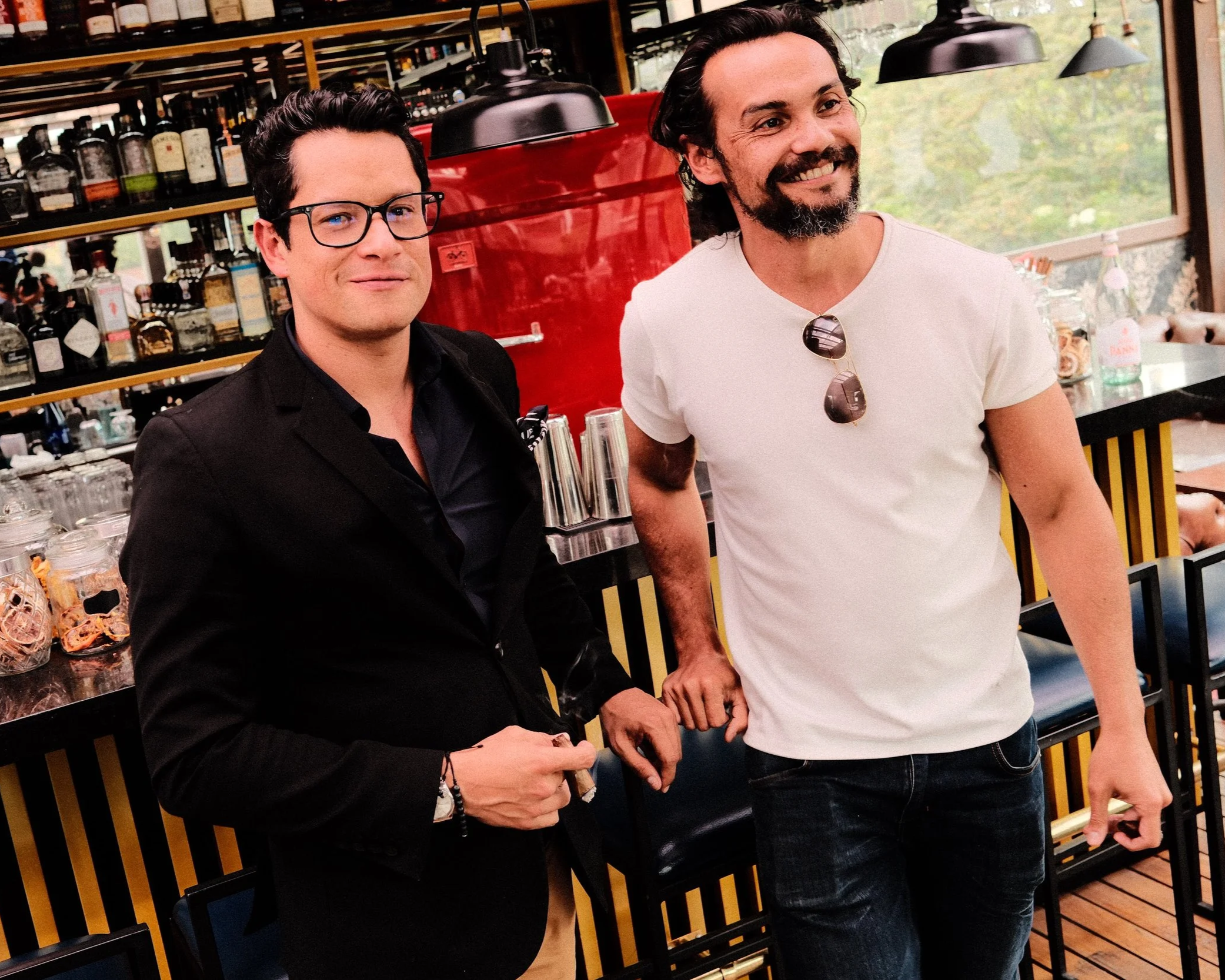
In Colombia’s overlooked tobacco fields, Francis Gillis and Juan Camilo Rodriguez are redefining what a cigar experience can be.
How Tobacco Road Became a WhereNext Original
Tobacco Road began by accident.
My wife and I were traveling through Barichara when we noticed that the Bribón factory had opened and decided to walk inside. We had not scheduled a scouting visit or arrived with a product concept. Francis happened to be there.
It was pure serendipity.
The pieces of the experience were already in front of us: a working factory, torcedoras rolling cigars by hand, a tasting room in Bogotá, agricultural relationships in Santander and Montes de María, and two founders trying to recover a part of Colombia’s history that most travelers know nothing about.
Nothing needed to be invented.
What the experience needed was connective tissue.
We began thinking about how a guest could start with the finished cigar in Bogotá, travel to Barichara to meet the people making it, and, when the agricultural calendar allowed, continue into the fields where the process begins.
Tobacco Road grew from that idea.
Bribón brings the people, working spaces, tobacco knowledge, production process, and agricultural relationships. WhereNext Travel connects those elements into a larger journey, manages the pacing and logistics, and determines which version of the experience makes sense for each traveler.
Tobacco Road is co-created by WhereNext Travel Colombia and Bribón Cigars.
Why It Matters
It would be easy to reduce Tobacco Road to smoking a bespoke cigar. That would miss most of the story. The more interesting subject is what it takes to rebuild a craft after the industry surrounding it has contracted. It takes farmers willing to keep growing tobacco, people prepared to test different varieties and agricultural methods, proper fermentation and aging infrastructure, and torcedoras whose hands can detect problems that a visitor may not notice until the cigar is burning badly thirty minutes later. It also takes a company willing to treat those skills as valuable.
In our ORIGIN story, Bribón’s founders described their effort to provide formal contracts, social security, and a route toward living wages for its workers. One employee had reportedly worked in the cigar industry for 21 years without previously receiving a formal contract or benefits.
The guest does not need a lecture about any of this. The experience explains itself.
Who This Is For
Tobacco Road works especially well for:
Adult travelers interested in how products are grown and made
Experienced cigar smokers curious about Colombian tobacco
Beginners who want guidance without cigar-club posturing
Couples and friends who enjoy slow, conversational experiences
Private travelers interested in agriculture, craft, food, design, or entrepreneurship
Journalists seeking a strong narrative connection between Bogotá and Barichara
Small private groups, media teams, and selected incentive programs
Guests willing to spend time with a process rather than rush through an activity
It is not suited to children, guests who are uncomfortable around tobacco smoke, or travelers who do not meet the applicable legal-age requirements for tobacco and alcohol.
How We Use This in Itineraries
Tobacco Road works best as a thread running through a larger Colombian journey.
We generally use the Bogotá tasting near the beginning of the trip. It introduces the cigar, the founders, and the questions guests will carry with them to Barichara.
The factory experience should not be jammed into a transfer day. It works better during a stay of several nights, with enough space for the rolling, tasting, and conversation to unfold without everyone checking the clock.
A seasonal farm visit requires further flexibility. We confirm what is actually happening before including it. There is little value in driving guests into a field simply because an itinerary promised a field.
Planning Notes
Format: Private and flexible; available as a Bogotá tasting, a Barichara factory experience, or the complete Tobacco Road journey
Location: Bogotá and Barichara, with possible seasonal farm access in Santander
Bogotá Experience: Approximately two hours
Barichara Rolling Experience: Approximately 30 minutes
Complete Journey: Designed across the Bogotá-to-Barichara portion of a multi-day Colombia itinerary
Best Time of Day: Late afternoon or evening in Bogotá; daytime for the factory; morning is generally preferable for farm access
Best For: Adult FIT travelers, couples, friends, private groups, advisors, media, and selected MICE programs
Works Well With: A Bogotá culinary or design stay followed by several nights in Barichara and Santander
Seasonality: The Bogotá and factory components can operate throughout the year; field access depends on weather, crop stage, and active farm work
Special Notes: Advance planning is required. Guests should expect tobacco smoke inside the tasting and factory environments. Dietary restrictions can be considered when designing the food pairings
Frequently Asked Questions
What is Tobacco Road?
Tobacco Road is a private Colombian cigar experience co-created by WhereNext Travel and Bribón Cigars. It connects a two-hour tasting in Bogotá with cigar rolling and factory access in Barichara, plus a possible seasonal tobacco-field visit.
Is Tobacco Road a private experience?
Yes. The format is designed around the traveler, private group, and larger itinerary.
Where does Tobacco Road take place?
The complete journey takes place in Bogotá and Barichara, with possible seasonal farm access near Barichara in Santander.
How long does the experience take?
The Bogotá tasting lasts approximately two hours. The hands-on cigar-rolling experience in Barichara lasts approximately 30 minutes. Tastings, meals, founder conversations, factory visits, and seasonal field access can extend the Barichara program.
What do guests do?
Guests learn how to cut and light a cigar, take part in food and drink pairings, visit Bribón’s working factory, meet members of the production team, and roll a cigar by hand. Farm activities vary according to the season.
Do guests need to be experienced cigar smokers?
No. The experience works for both regular cigar smokers and adult beginners.
Has Bribón received international recognition?
Yes. CigarsLover Magazine ranked the Bribón Torpedo No. 5 in its 2025 Rest of the World category. The magazine’s award process involved selecting the year’s highest-scoring cigars and testing them again blind.
Is the tobacco-field visit always available?
No. Field access depends on the crop calendar, weather, current farm work, and permission at the time of travel.
Is Tobacco Road suitable for families?
It is intended for adults who meet the applicable legal-age requirements for tobacco and alcohol. It is not designed for children.
Can it work for private groups, MICE, or media trips?
Yes, depending on the group size and format. Factory capacity and seasonal farm access require advance planning.
Request a Proposal
If you’re designing a private journey through Colombia or Latin America, we’d be happy to place Tobacco Road inside the right itinerary.