
Is Colombia Safe to Visit? What Luxury Travelers Should Know
Colombia's established tourism destinations and its remote conflict-affected regions are not the same risk environment. We examine current crime data, travel advisories, and how changing conditions are managed on the ground.
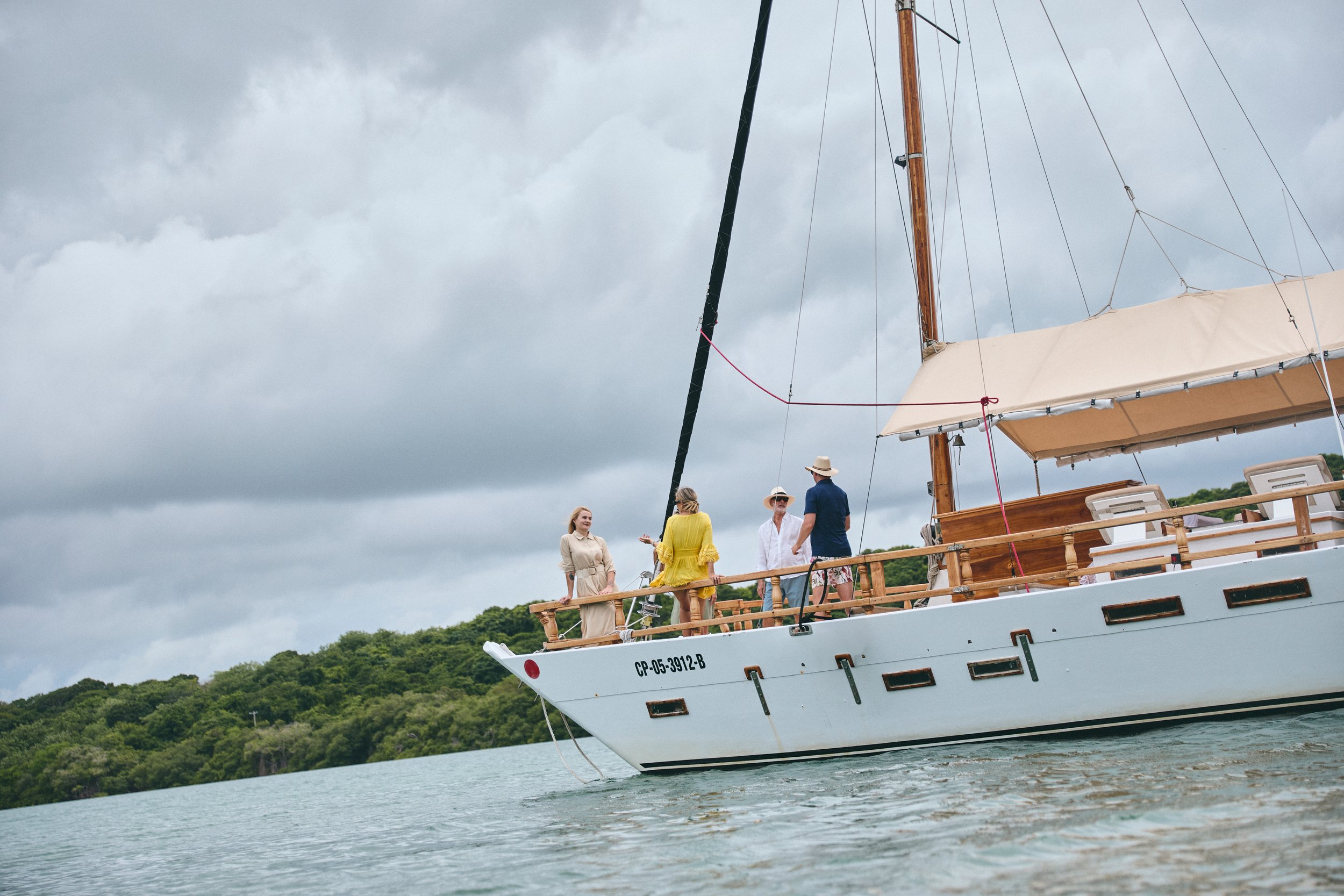
Guests aboard a private luxury catamaran near Cartagena. Established tourism destinations such as Cartagena operate in a very different environment from Colombia’s remote, conflict-affected regions, which is why countrywide safety assessments require geographic context.
BACK OF HOUSE examines the challenges, systems, trade-offs, and judgment behind designing, operating, and continually improving the travel experience in Latin America.
Is Colombia safe to visit?
For the destinations and routes WhereNext Travel Colombia currently operates, our answer is yes.
That does not mean that travelers should ignore official advisories. Colombia is a country of more than 1.1 million square kilometers, with major cities, remote rural regions, Caribbean and Pacific coasts, three Andean mountain ranges, international borders, and areas where illegal armed groups remain active.
The security considerations for a traveler visiting Bogotá, Cartagena, Medellín, the Coffee Country, or other established tourism destinations are very different from those for a traveler moving through a remote, conflict-affected border region with limited infrastructure and little international tourism.
When working with a DMC to build an itinerary, it is important to understand that distinction.
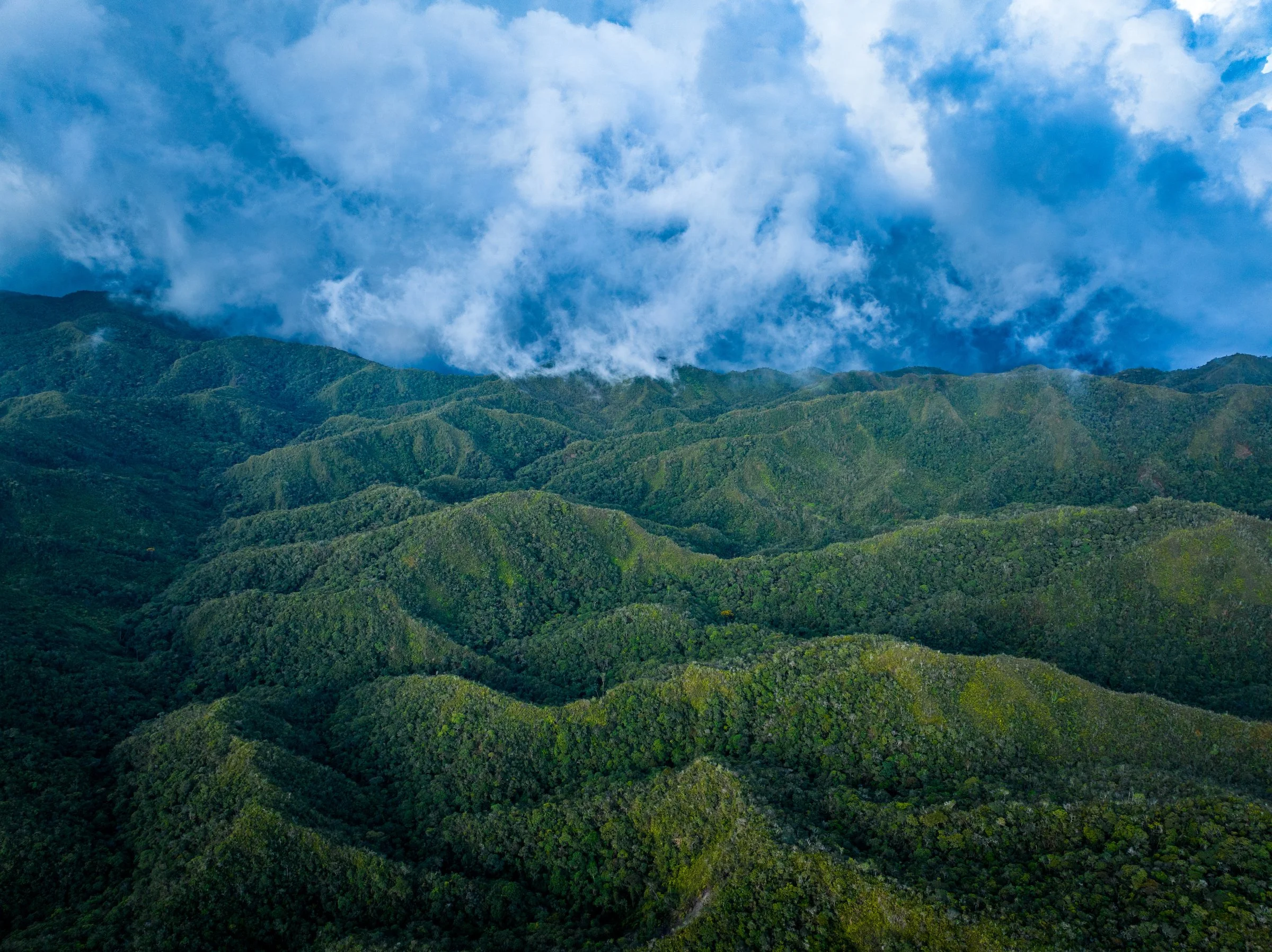
A remote, roadless area of Antioquia, Colombia. Large parts of the country sit far outside the infrastructure and travel patterns most international visitors encounter, which is one reason national-level security discussions can obscure major regional differences.
Colombia Is Much Bigger and More Remote Than Most Travelers Realize
One reason national security headlines can be misleading is geography.
The Colombian Amazon alone covers approximately 477,000 square kilometers, about 42 percent of Colombia’s continental territory. Parts of the country’s center-south Amazon have been described by Colombia’s National Planning Department as almost completely isolated from the rest of the country by land, with river and air infrastructure providing the principal connections.
For a North American traveler, Alaska is a more useful mental model than a densely connected U.S. state. Large stretches of Colombia are sparsely populated, difficult to reach overland, and far removed from the places most international travelers visit.
International tourism is similarly concentrated.
Colombia received about 3.84 million foreign nonresident visitors in 2023. Yet MinCIT data show that departments such as Putumayo and Vichada historically accounted for less than 0.1 percent each of national foreign arrivals. MinCIT has also documented large regional gaps in tourism infrastructure and services, particularly in Vichada, Vaupés, and Amazonas.
These are not the places driving Colombia’s mainstream international tourism industry.
We know some of these regions unusually well because our work has taken us there.
WhereNext was the local implementing subcontractor for the $40 million USAID Destination Nature initiative, a program focused on nature tourism, conservation, rural livelihoods, and tourism development in regions emerging from decades of conflict. Our teams worked in destinations including Guaviare, Putumayo, and Cauca, deploying personnel into areas where logistics and security required formal planning and security briefings before fieldwork began.
That experience taught us how not to treat “Colombia” as one security environment.
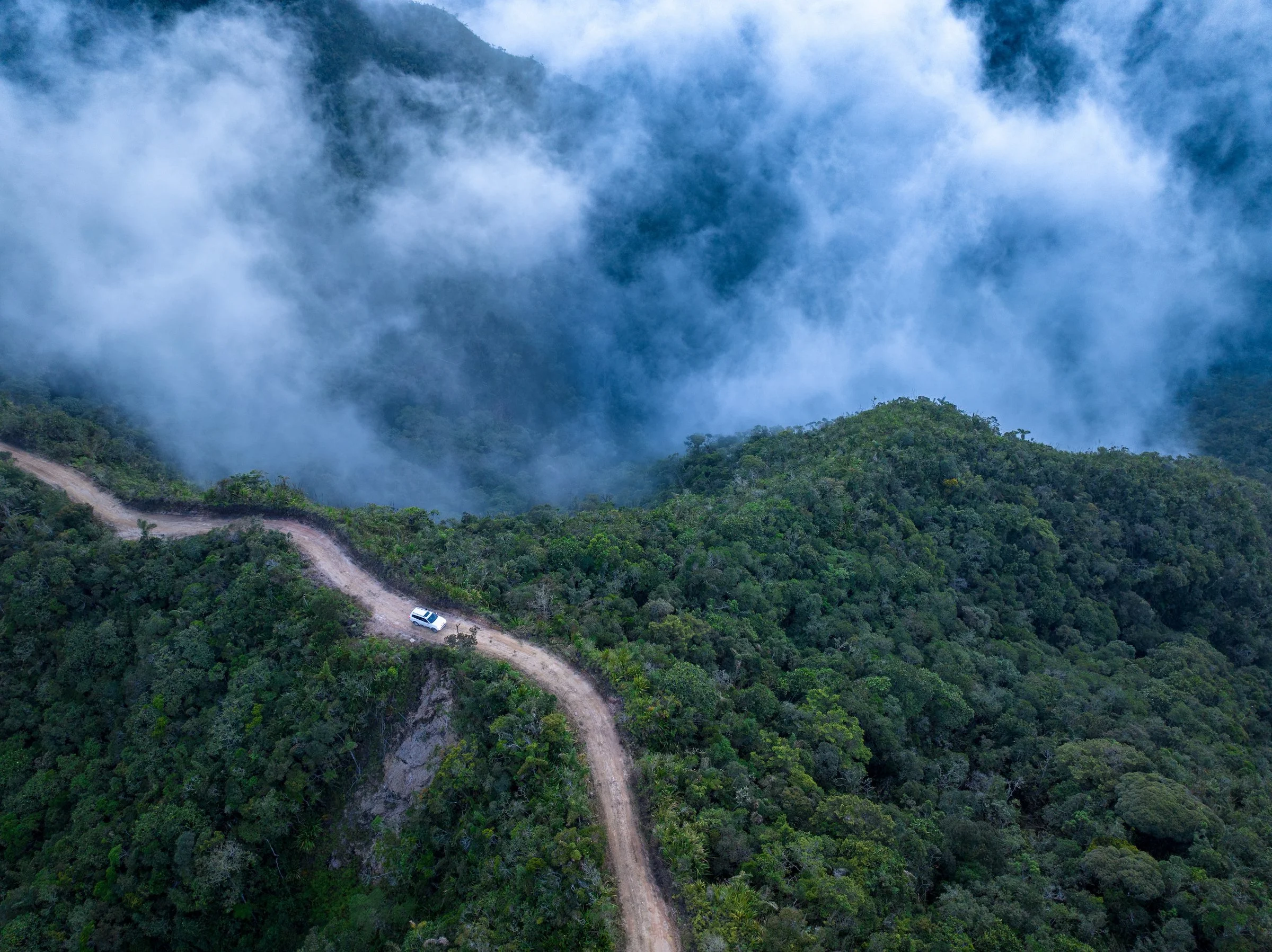
Guests traveling through a remote mountain corridor in Antioquia, Colombia.
What Current Travel Advisories Say About Colombia
The U.S. Department of State currently classifies Colombia as Level 3: Reconsider Travel because of crime, terrorism, civil unrest, kidnapping, and natural disasters. It separately advises Americans not to travel to Arauca, Norte de Santander, Cauca except Popayán, Valle del Cauca except Cali, and areas within 10 kilometers of the Venezuelan border.
Look closely at those exceptions.
The advisory does not treat Cali as equivalent to all of Valle del Cauca. It does not treat Popayán as equivalent to all of Cauca. And it identifies the Venezuelan border separately from the country as a whole.
A DMC needs to work at that level of detail.
A countrywide advisory is one input. The actual journey involves particular cities, roads, airports, hotels, guides, communities, national parks, transportation providers, and operating partners.
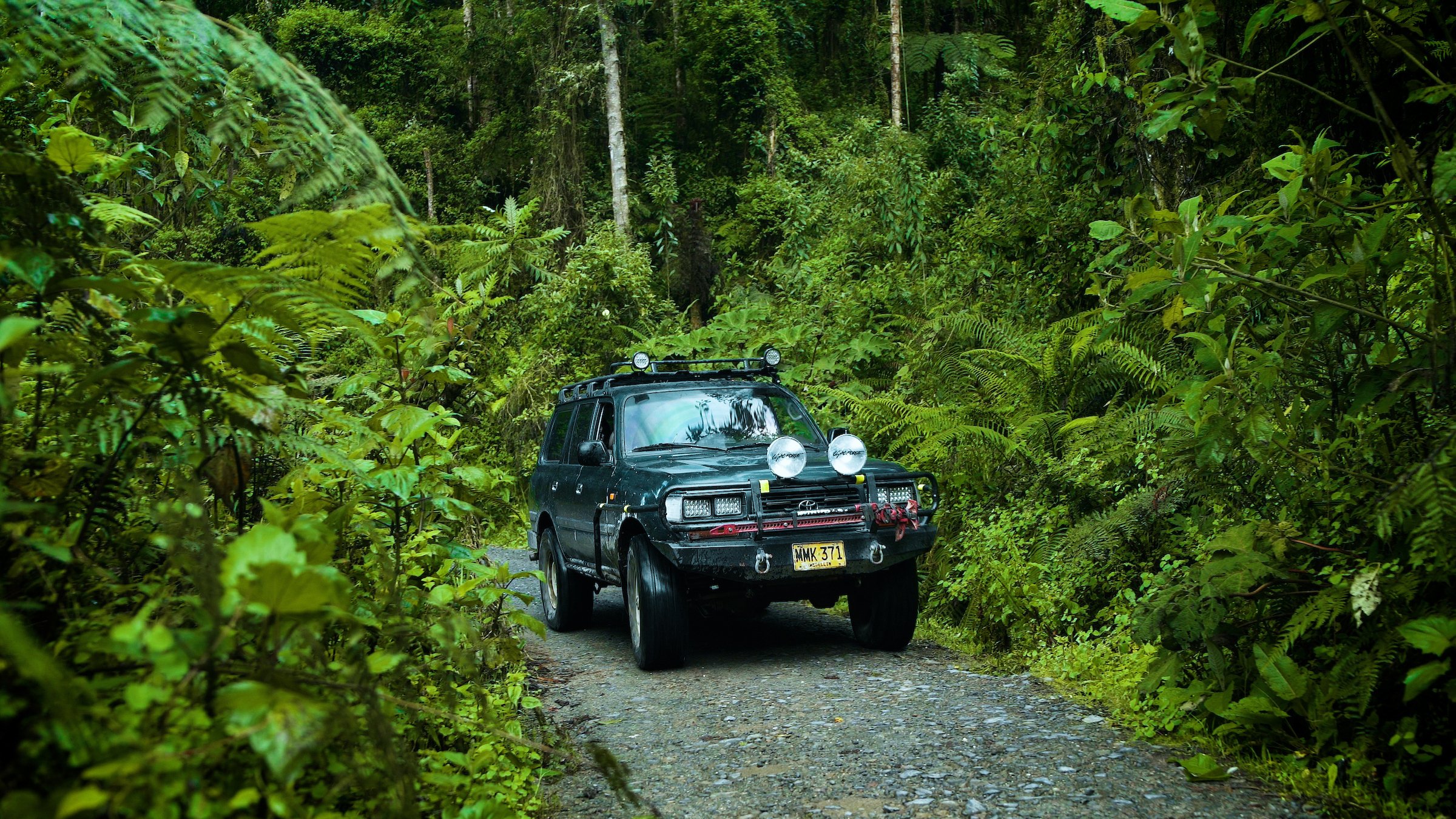
Guests travel by four-wheel drive through a remote part of Antioquia, Colombia, where road access is limited and operating conditions differ substantially from the country’s established tourism centers.
Published March 19, 2025 · Updated August 11, 2026
What Does Colombia’s Crime Rate Tell Travelers?
Readers regularly reach this article searching for the Colombia crime rate, crime in Colombia, and the crime rate in Bogotá.
Those statistics are worth examining, but they need context.
Colombia’s National Police publishes crime data by type, geography, and period rather than reducing security to a single national number. Bogotá’s government reported that nine of eleven major security indicators declined in 2025, including homicides, robbery of persons, residential burglary, vehicle theft, motorcycle theft, extortion, and sexual offenses. Homicides fell 3.4 percent compared with the previous period measured.
The decline in homicide continued into early 2026. Bogotá recorded 154 homicides during the first two months of 2026, compared with 176 during the same period in 2025, a reduction of 12.5 percent.
Those numbers tell us something about conditions in Bogotá.
They do not tell us whether a gravel road in rural Cauca should be used next Tuesday.
Colombia Crime Rate vs. the U.S.: Is the Comparison Useful?
Another common search bringing readers here is Colombia crime rate vs. U.S.
The previous version of this article compared Colombian cities directly with U.S. cities and suggested Colombia was safer across several crime categories.
We no longer think that is a useful way to answer the question.
The Colombian National Police and the FBI both publish substantial crime datasets, but the collection systems, definitions, reporting practices, jurisdictions, and time periods are not identical. The FBI’s Uniform Crime Reporting system, for example, depends on data voluntarily submitted by more than 19,000 participating law-enforcement agencies.
The underlying numbers are also moving. Preliminary FBI data released in May 2026 estimated that U.S. violent crime fell 9.3 percent in 2025, including an 18.1 percent decline in murder and non-negligent manslaughter.
A carefully controlled comparison of a specific crime can be informative. A blanket statement that Colombia is “safer than the United States,” or vice versa, tells a traveler very little about the journey they are actually considering.
We would rather tell you where we are comfortable operating and why.
Colombia Has a New Government
President Abelardo de la Espriella was sworn into office on August 7, 2026 after winning the June presidential runoff. His inaugural agenda included a harder line on drug trafficking and illegal armed groups. That same day, the U.S. government announced plans for $1 billion in security assistance to the new Colombian government.
As of writing this article, the administration has been in office for only a few days. There is not yet credible security-outcome data that can be attributed to the new government.
One day before the new president took office, Colombia’s Ministry of Commerce, Industry and Tourism also released an updated Strategic Tourism Security Plan for 2026, developed with input from 17 departments and 150 municipalities. Its priorities include risk prevention, public-security coordination, response capacity, tourism infrastructure, and improved information systems.
We are watching what the new administration does with those systems rather than assuming policy announcements have already changed conditions on the ground.
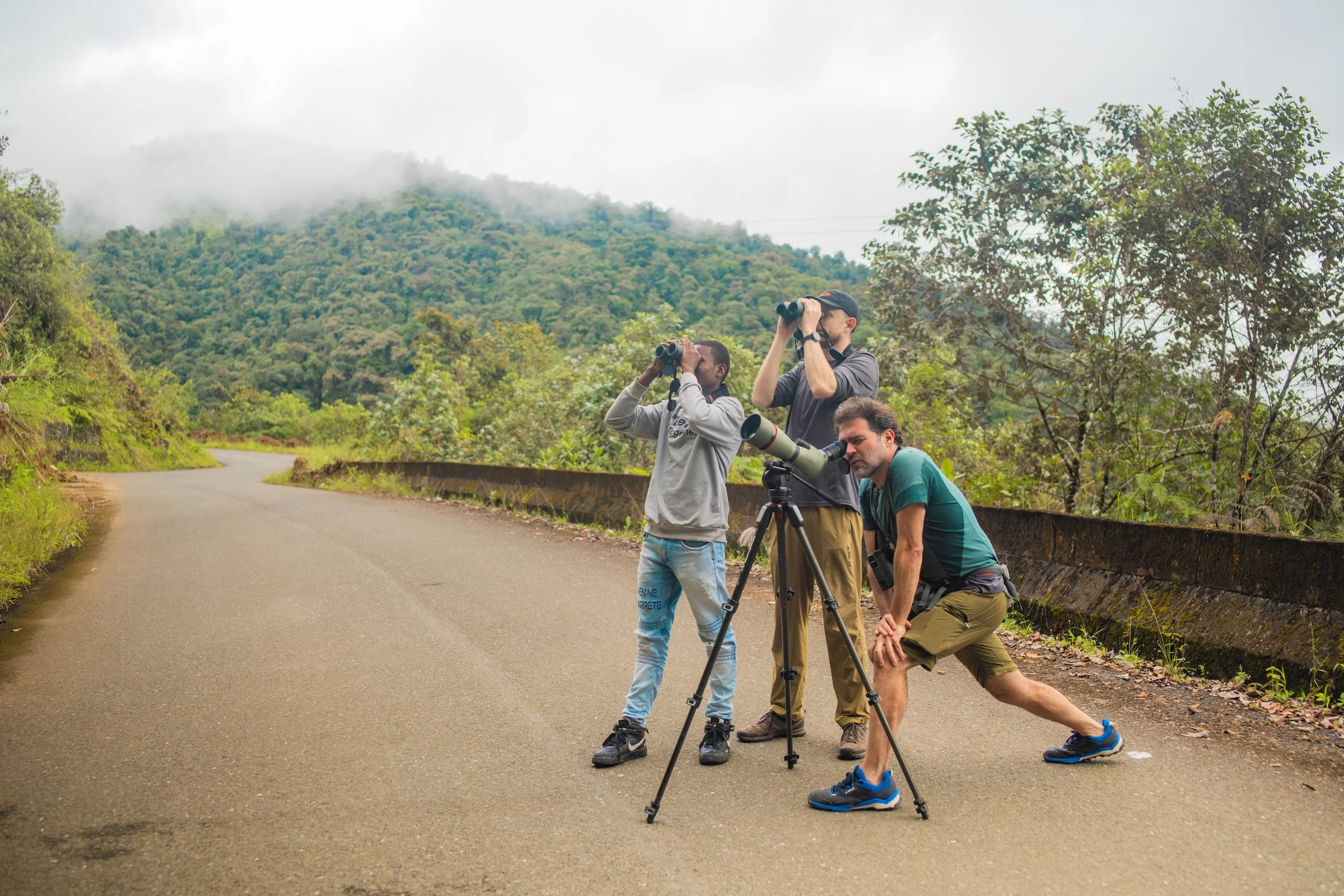
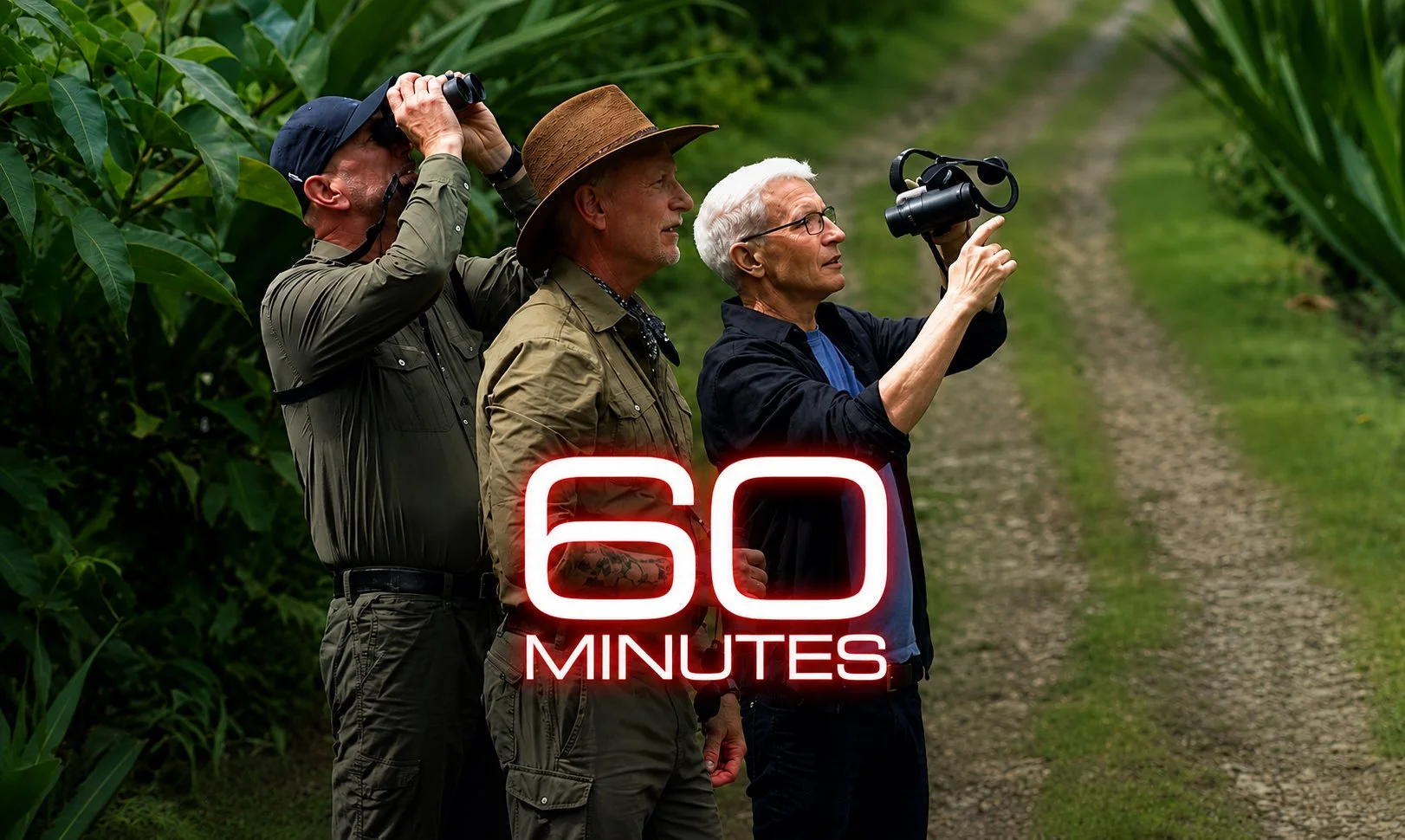
WhereNext Travel team members at a remote birding location in Valle del Cauca while filming The Birders Show. Fieldwork in less-traveled parts of Colombia has given our teams firsthand experience with the logistics and security planning required beyond the country’s established tourism corridors.
Where Your DMC Partner Becomes Relevant
This is where your DMC partner becomes relevant.
WhereNext Travel Colombia has team members living in Bogotá, Popayán, and Colombia’s Coffee Country, along with operating partners across the country’s principal tourism regions. Stephan Schier, our Operations Director and the author of this article, is based in Seattle and travels regularly to Colombia and throughout the region.
Our Colombia network did not begin with luxury travel.
Years of documentary production, destination-development work, conservation projects, scouting, and the USAID Destination Nature initiative put our teams into regions far beyond Colombia’s conventional tourism circuit. Destination Nature alone involved work across ecologically important and often operationally complex parts of the country.
That experience changes what we want to know before operating a journey.
Not simply, “Is Colombia safe?”
We want to know what is happening in the place where the guest is actually going.
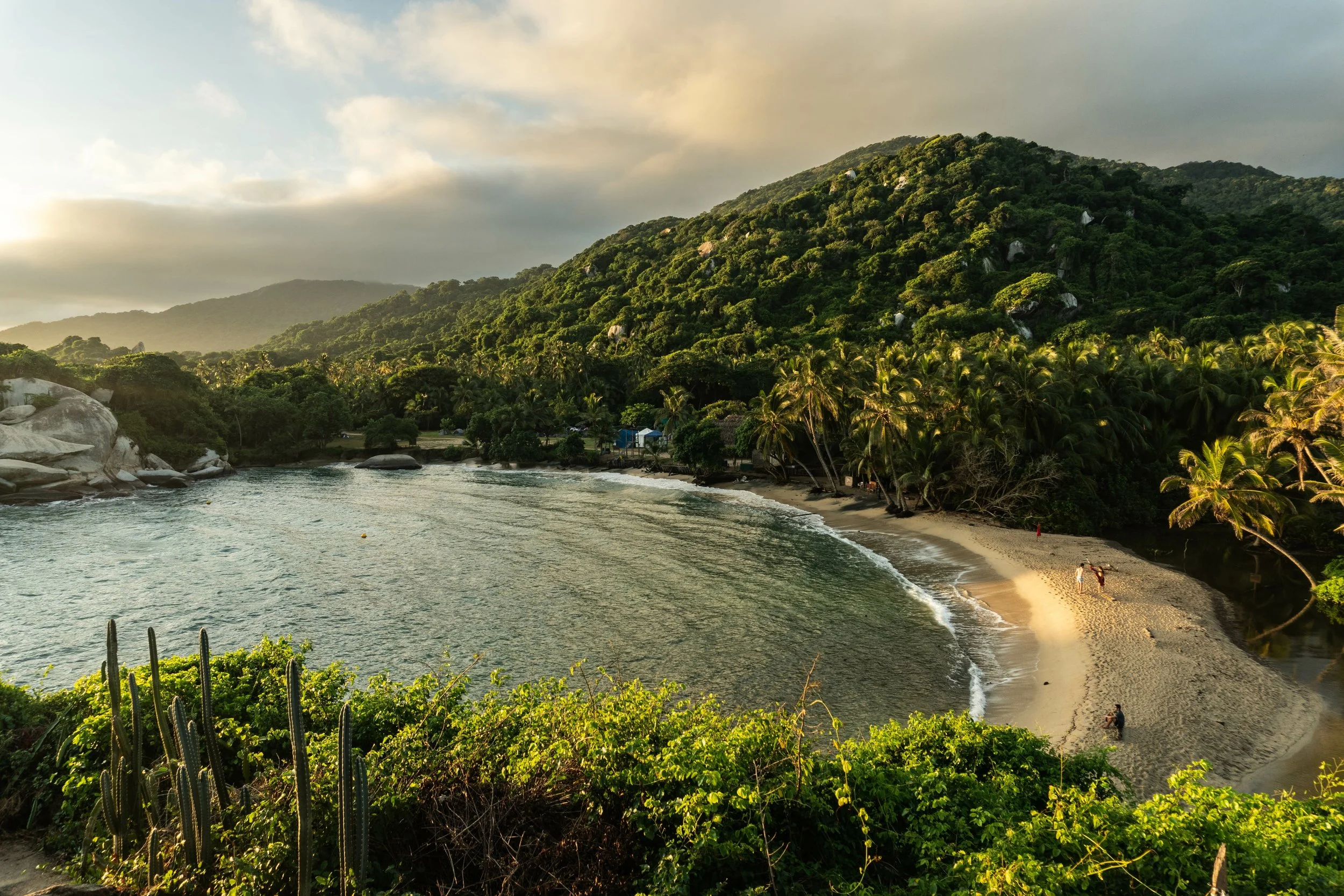
Tayrona National Park on Colombia’s Caribbean coast. In February 2026, the park temporarily closed after authorities said minimum security conditions could not be guaranteed, then reopened in March following a coordinated security response.
What Happened at Tayrona National Park in 2026
Tayrona National Park gave us a useful example earlier this year.
On February 17, 2026, Colombia’s National Parks authority temporarily closed Tayrona because it could not guarantee minimum security conditions for visitors, communities, and park employees. The closure followed threats and intimidation against personnel and other security problems affecting the park and the surrounding Sierra Nevada de Santa Marta region.
We had travelers approaching Colombia with Tayrona in their itineraries.
We did not send them to the destination in the hope that the conditions improved.
Before they arrived, our operations team moved the guests to a different beach destination and rebuilt that portion of their journeys.
Then circumstances changed again.
The Colombian government announced that Tayrona would reopen on March 5, following a coordinated security response involving national and local authorities.
By then, our guests were already traveling in Colombia.
Once we had reviewed the changed conditions and determined that the security concern affecting their visit was no longer present, we restored the original Tayrona portion of their itinerary.
The guests did not have to interpret warnings, identify an alternative destination, negotiate new services, or decide when it was appropriate to return.
That work happened behind the journey.
Current Conditions: August 11, 2026
Colombia is dealing with another kind of travel disruption as we update this article.
A magnitude 7.4 earthquake struck near San José del Palmar, Chocó, on August 10, 2026. The Colombian Geological Service confirmed the magnitude and epicentral area, and significant damage has been reported across western Colombia, including Cali and parts of the Coffee Country. Emergency response operations remain underway.
Our own teams are reporting conditions from the places where they live and work.
In Bogotá, our team has reported no damage. In Popayán, we have received reports of energy outages. Damage has been reported in Cali, the Coffee Country, and Chocó, and our team in the affected region is monitoring the emergency response as it develops.
Conditions are changing quickly, so travelers currently in or traveling soon to affected areas should follow local authorities, airline updates, government travel guidance, and information from their travel operator.
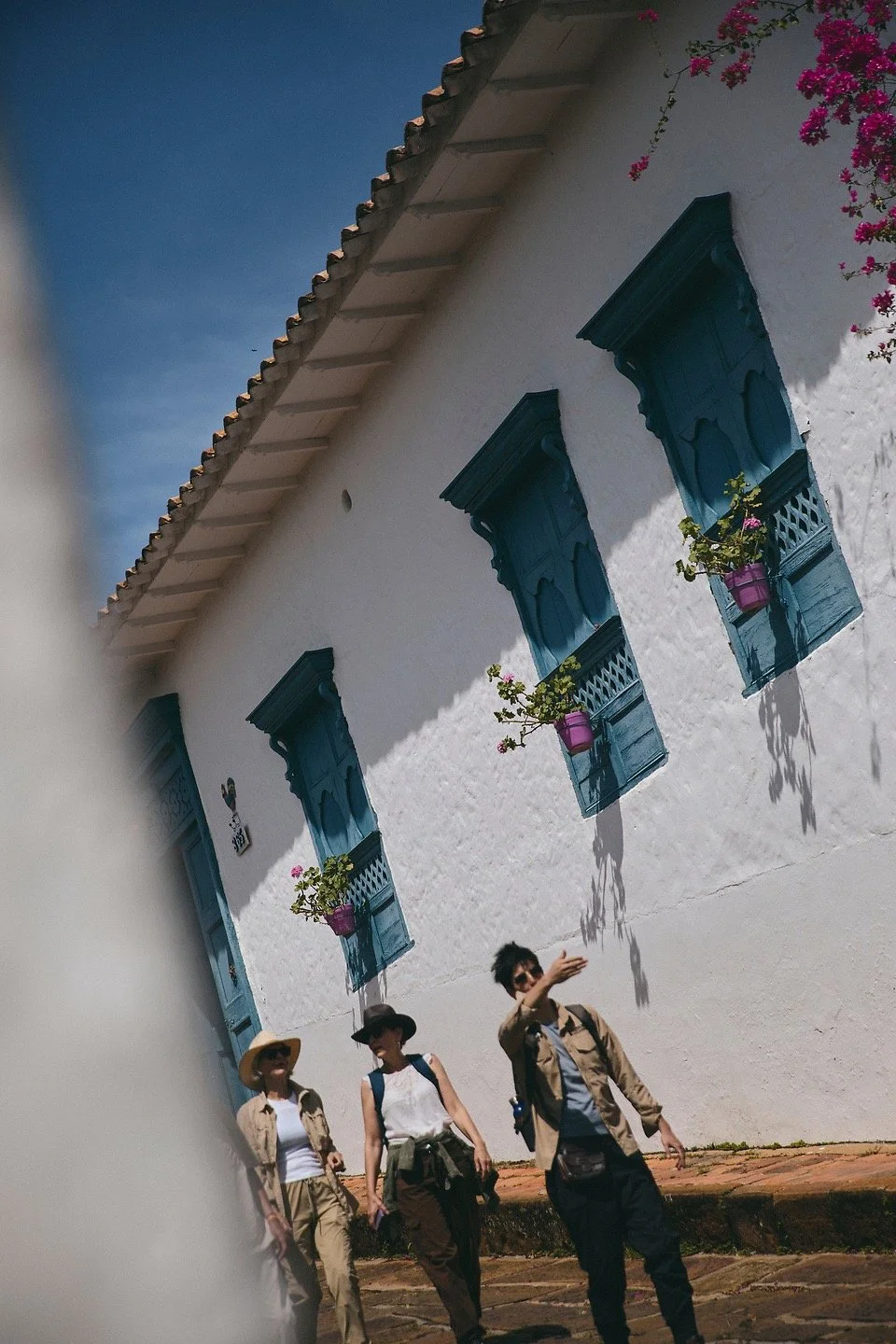
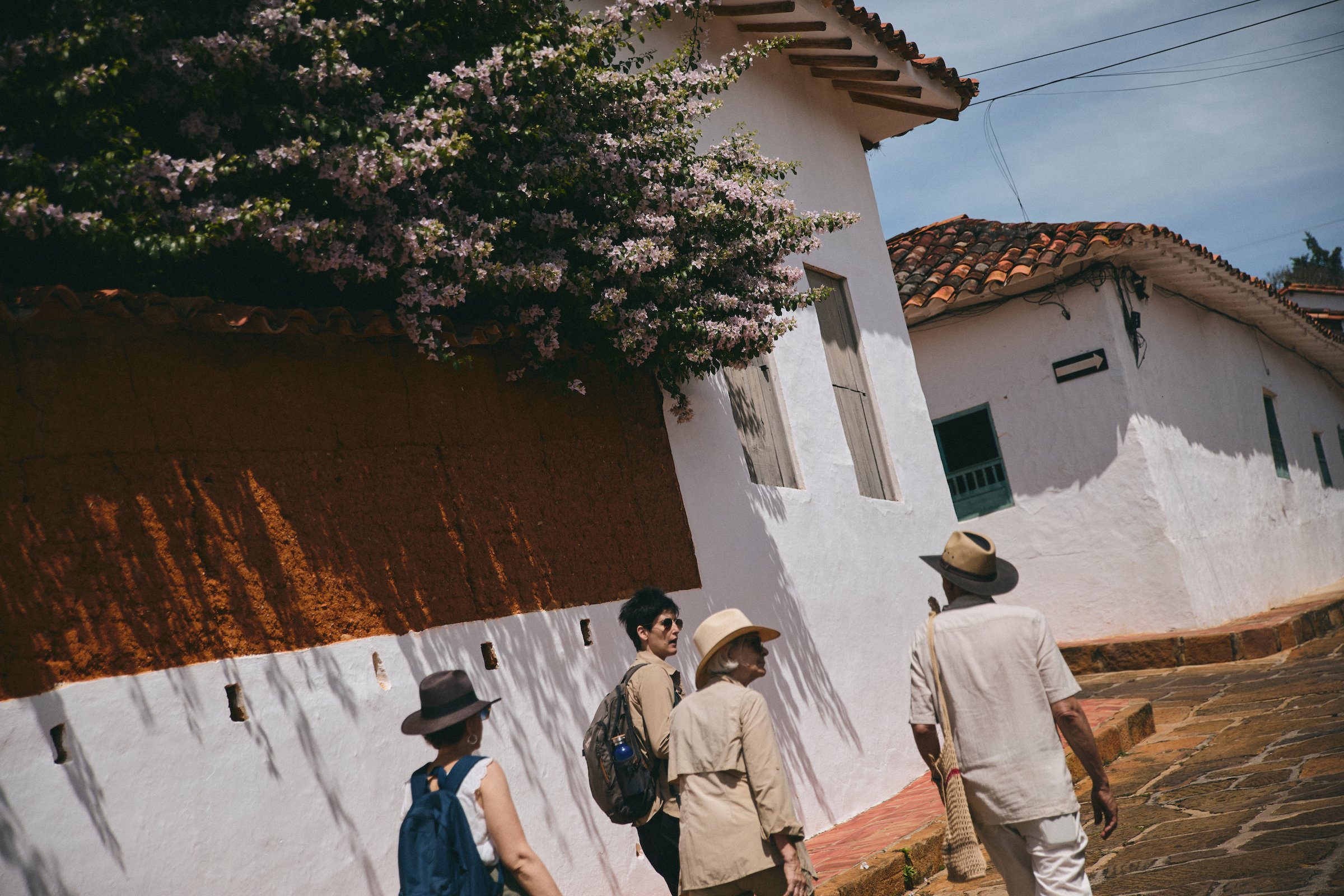
Guests walking through Barichara, one of Colombia’s established tourism destinations.
So, Is Colombia Safe to Visit?
Yes, when the journey is built around destinations and routes that are safe to operate under current conditions and is managed by people who know what is happening on the ground.
Bogotá, Cartagena, Medellín, the Coffee Country, and Colombia’s other established tourism destinations are not equivalent to remote conflict-affected border regions with limited infrastructure and active government warnings.
We would not build an itinerary through a region we considered unsafe simply because it happened to contain an interesting attraction.
Nor would we tell a traveler to avoid an entire country of more than 1.1 million square kilometers because conditions in one remote region deteriorated.
The work is more precise than that.
Know the places.
Know the people.
Monitor what is changing.
And when the information changes, change the journey.